
Key Takeaways
-
Your gut is home to trillions of microbes carrying close to 3.3 million genes, which dwarfs the roughly 20,000 in your own DNA and lets them do jobs your body can't do alone.
-
Roughly 7 in 10 Australian adults miss the daily fibre target of 25g for women and 30g for men, and fibre is the single most effective way to feed your good gut bacteria.
-
By many estimates around 70% of your immune activity sits in the gut lining, so a balanced microbiome and a strong immune system tend to rise and fall together.
-
Persistent bloating, irregular bowel habits, sugar cravings, fatigue and frequent minor illness can all point to an imbalanced gut, a state known as dysbiosis.
-
Diversity is the real marker of gut health. The wider your range of beneficial species, the better your gut copes with antibiotics, poor diet and everyday stress.
Your gut microbiome is the community of trillions of bacteria, fungi and other microbes living in your digestive tract, and its balance shapes your digestion, immunity and daily energy. Most gut problems trace back to a loss of diversity in that community, and the good news is that diversity responds fast to what you eat and how you live. This guide walks you through what the gut microbiome is, how to spot when it's out of balance, and the practical steps that rebuild it. We'll keep every claim grounded in the science so you can act on it with confidence.
What Is the Gut Microbiome?
The gut microbiome is the full population of microorganisms living in your digestive tract, mostly in your large intestine. You're carrying trillions of them, including bacteria, fungi and viruses. Despite their tiny size, they do an outsized amount of work.
What makes this community powerful is its genetic range. Your microbiome carries close to 3.3 million microbial genes, compared with the roughly 20,000 in your own genome. That extra genetic toolkit lets gut bacteria perform jobs your body can't do alone.
A healthy adult gut typically hosts between 500 and 1,000 bacterial species. Here's what that community does for you every day:
-
Breaks down fibre your body can't digest on its own, turning it into fuel.
-
Produces short-chain fatty acids like butyrate that feed your gut lining and calm inflammation.
-
Trains your immune system to tell friend from foe.
-
Synthesises vitamins including vitamin K and several B vitamins.
-
Crowds out pathogens by competing for space and food.
New to how gut bacteria and supplements fit together? Start with our plain-English explainer on how probiotics can support a healthier gut before you go deeper.
Why Does Your Gut Microbiome Matter?
Your gut microbiome matters because it sits at the centre of digestion, immunity and inflammation control, three systems that shape how well you feel day to day. A large share of your immune activity, by many estimates around 70%, is concentrated in the tissue lining your gut. That means the state of your microbiome and the strength of your immune response are closely tied.
The link runs through your gut wall. A balanced microbiome helps maintain a strong intestinal lining, which acts as a barrier holding unwanted substances inside the gut where they belong.
When that barrier weakens, low-grade inflammation can follow. Here's where a balanced microbiome earns its keep:
-
Immune support: Beneficial bacteria compete with pathogens and help regulate immune signalling.
-
Digestive comfort: A balanced community ferments food smoothly, which reduces gas and bloating.
-
Nutrient absorption: Gut microbes help you extract minerals and produce vitamins.
-
Inflammation control: Short-chain fatty acids from fibre fermentation help keep the gut lining calm.
If bloating is your main concern, we've covered whether probiotics help with bloating in a dedicated guide.
What Are the Signs of an Unhealthy Gut Microbiome?
The most common signs of an unhealthy gut microbiome are digestive discomfort, irregular bowel habits and a run of minor illnesses that won't quite clear. Clinicians call this imbalanced state dysbiosis, where harmful bacteria outnumber beneficial ones. It rarely announces itself with one dramatic symptom. It shows up as a cluster of smaller ones.
Watch for these common markers:
-
Frequent bloating or excess gas, especially after meals.
-
Irregular bowel habits, swinging between constipation and looseness.
-
Persistent sugar cravings, which certain gut bacteria actively drive.
-
Ongoing fatigue that rest doesn't fully fix.
-
Catching every bug going around, a sign your gut-based immune defences are stretched.
-
Skin flare-ups like rosacea or breakouts that track with digestive changes.
One or two of these on their own aren't cause for alarm. A steady pattern of several together is worth acting on, and it often responds well to dietary change.
What Causes an Imbalanced Gut Microbiome?
An imbalanced gut microbiome usually comes down to diet, medication and lifestyle stripping away beneficial bacteria faster than your body replaces them. The biggest single driver is a low-fibre, high-sugar diet, which starves good bacteria and feeds the harmful ones.
Antibiotics are the other major disruptor. They're a necessary medical tool, and they can't tell the difference between the bacteria making you sick and the beneficial ones keeping you balanced.
Here are the main culprits behind dysbiosis:
-
Low fibre intake: Starves the bacteria that produce short-chain fatty acids.
-
High sugar and ultra-processed foods: Feed harmful, gas-producing strains.
-
Antibiotic courses: Reduce microbial diversity, sometimes for months.
-
Excess alcohol: Disrupts the balance of gut flora and irritates the gut lining.
-
Chronic poor sleep and physical inactivity: Both track with lower diversity.
If you've recently finished a course of antibiotics, our guide on taking probiotics after antibiotics explains how to rebuild diversity during the critical recovery window. You can also read how to starve bad gut bacteria through your diet.
How Do You Improve Your Gut Microbiome?
You improve your gut microbiome by feeding beneficial bacteria more fibre, adding diversity to your diet, and cutting the foods that fuel harmful strains. Diversity is the goal, because a varied microbiome is a resilient one. The changes below start shifting your gut flora within days, though a stable new balance takes a few weeks.
Follow these steps in order of impact:
-
Eat more fibre: Aim for 25g to 30g a day from vegetables, wholegrains, legumes and fruit. This is the single most effective change you can make.
-
Add fermented foods: Yoghurt, kefir, sauerkraut and kimchi deliver live bacteria and food for the ones you already have.
-
Diversify your plants: Try for 30 different plant foods a week. Range matters more than quantity for building diversity.
-
Cut ultra-processed foods and added sugar: These feed the strains you're trying to reduce.
-
Prioritise sleep and movement: Both are linked to higher microbial diversity.
-
Consider a targeted probiotic supplement: Live strains help repopulate beneficial bacteria, especially after antibiotics or illness.
Consistency beats intensity here. Small daily habits rebuild a microbiome far more reliably than a short, strict cleanse.
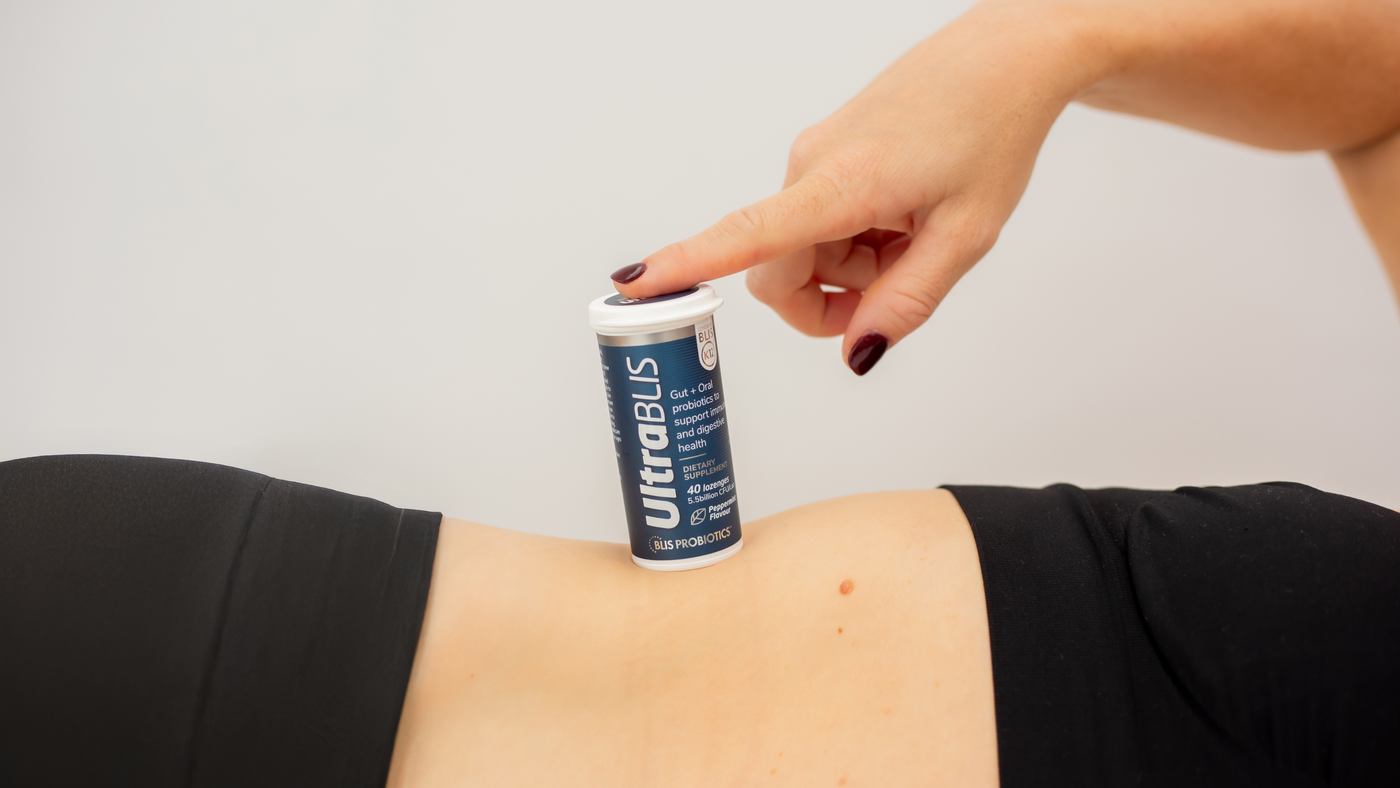
Ready to give your gut a daily head start? UltraBLIS® pairs two proven gut strains with an oral-health strain in a single daily lozenge, so you're supporting your microbiome from the very first point of digestion. It's a simple addition to the food-first steps above.
What Are The Best Foods For a Healthy Gut Microbiome?
The foods that feed a healthy gut microbiome fall into three groups: prebiotic fibre, fermented foods and polyphenol-rich plants. Prebiotic fibre is the fuel your good bacteria ferment into short-chain fatty acids. Fermented foods add live cultures. Polyphenols, the compounds that give plants their colour, act as an extra food source for beneficial species.
Build your meals around these three groups:
|
Food group |
What it does |
Everyday examples |
|
Prebiotic fibre |
Feeds beneficial bacteria and fuels short-chain fatty acid production |
Oats, garlic, onions, leeks, bananas, legumes |
|
Fermented foods |
Deliver live bacteria and support existing colonies |
Yoghurt, kefir, sauerkraut, kimchi, miso |
|
Polyphenol-rich plants |
Provide extra fuel that favours good species |
Berries, green tea, dark chocolate, olive oil, colourful vegetables |
The practical target is range. A plate with several colours and textures does more for your microbiome than a single "superfood" eaten daily.
For a deeper look at cultured and live-culture options, see our guide to foods that naturally contain probiotics.
Can Probiotics Help Your Gut Microbiome?
Yes, probiotics can help your gut microbiome by adding live beneficial bacteria that crowd out harmful strains and support a healthier balance. They work through a process called bacterial interference, where good bacteria compete with pathogens for space and food. Diet does the heavy lifting for long-term gut health, and a targeted probiotic gives your beneficial population a reliable daily top-up.
Not every strain does the same job, so the strain on the label matters just as much as the total count. These are the ones with the strongest gut evidence:
-
Bifidobacterium lactis HN019: A well-studied gut strain shown to shorten gut transit time and reduce digestive symptoms.
-
Lactobacillus acidophilus La-14: A widely researched strain that supports gut balance and the gut-based immune system.
-
Streptococcus salivarius BLIS K12®: An oral-cavity strain that supports the mouth and throat, the first checkpoint of your digestive tract.
Colony count matters too. Look for a product delivering at least 1 billion live CFU (colony forming units) so enough bacteria survive to make a difference.
This is where UltraBLIS® fits. It combines all three strains above in one daily lozenge at 5.5 billion CFU, supporting your gut and your oral microbiome together. It's made in New Zealand, fridge-free and pregnancy-safe, so it slots into a daily routine without fuss.
Curious about the timeline? Our guide on how long probiotics take to work sets realistic expectations for the first few weeks.
A stronger gut microbiome comes down to two habits: feed your beneficial bacteria a varied, fibre-rich diet, and top them up with proven strains when your gut is under pressure.
Start your daily support today with UltraBLIS®, BLIS's two-in-one gut and oral probiotic.
Frequently Asked Questions
How long does it take to reset your gut microbiome?
Early shifts in your gut bacteria can happen within one to three days of dietary change, but a stable new balance usually takes two to four weeks of consistent habits. After antibiotics, some species can take several months to fully recover. Fibre and diversity speed the process up.
Can you rebuild your gut microbiome naturally?
Yes. Increasing fibre, eating a wide range of plants, and adding fermented foods are the most effective natural ways to rebuild gut diversity. A targeted probiotic can support the process, especially after illness or antibiotics.
What kills good gut bacteria?
The main culprits are a low-fibre, high-sugar diet, antibiotic courses, excess alcohol, chronic stress and poor sleep. Antibiotics have the fastest and largest effect, reducing diversity for weeks to months. Ultra-processed foods slowly starve beneficial strains over time.
What are the symptoms of an unhealthy gut microbiome?
Common symptoms include bloating, irregular bowel habits, persistent sugar cravings, fatigue, frequent minor illness and skin flare-ups. A steady pattern of several of these together is more telling than any single symptom. This imbalanced state is known as dysbiosis.
Do I need a gut microbiome test?
For most people, a test isn't necessary to improve gut health, since the core steps of more fibre, more plant variety and fewer processed foods apply regardless of the result. Testing can be useful for tracking specific conditions with medical guidance. Start with dietary change first.
Is the mouth part of the gut microbiome?
Your mouth has its own distinct microbiome, and it's the starting point of your digestive tract. Bacteria you swallow travel down toward the gut, so oral and gut balance are connected - this is known as the oral-gut axis. Supporting both is why some probiotics, like UltraBLIS®, pair oral and gut strains.