
Menopause changes a lot more than your cycle. Your gut bacteria shift too, in ways researchers are only just starting to map properly, and that shift ripples out into digestion, sleep, mood and bone health. Here's what's actually established about probiotics and menopause, and where the evidence stands right now, honestly.
Why Does Menopause Affect Gut Health?
Oestrogen and your gut bacteria influence each other in both directions, through a relationship researchers have named the "estrobolome." A specific set of gut bacteria carry enzymes that reactivate oestrogen after your liver processes it, recycling it back into circulation rather than letting it pass straight through. As oestrogen drops during perimenopause and menopause, this whole system shifts, and large-population studies have found postmenopausal women's gut microbiomes shift toward a profile that looks more like a man's gut than her own pre-menopause one.
This is a normal part of the hormonal transition, not a sign your gut has gone wrong. It's also a big part of why a menopause probiotic gets searched for in the first place: your individual gut bacteria play a role in how your body handles the hormonal shift, alongside genetics, diet and everything else.
Do Probiotics Help With Menopause Symptoms?
Menopause brings a cluster of changes with a genuine gut-health thread running through them, not a random grab-bag of symptoms, and this is where "probiotics and menopause" searches usually start.
-
Bloating and digestion: changed bowel habits are common as gut bacteria diversity shifts.
-
Weight distribution: the same hormonal and microbiome changes are linked to shifts in where the body stores fat.
-
Sleep and mood: disrupted sleep and mood swings during menopause have a gut-brain component, which our Probiotics for Anxiety & Stress piece covers in more depth.
-
Bone health: declining oestrogen accelerates bone loss, and researchers are actively studying whether the gut-bone connection plays a part.
None of these need to be treated as separate problems requiring separate fixes. They're connected symptoms of one underlying hormonal shift, and gut health sits somewhere in the middle of most of them.
What Does the Evidence Actually Say About a Menopause Probiotic?
Early research suggests probiotics may help with specific menopause-related outcomes, though the studies are still small and the picture isn't settled yet. A triple-blind trial in postmenopausal women found probiotic supplementation improved mood and sleep quality over the study period. Separately, a 2-week trial in postmenopausal women with osteopenia found a multispecies probiotic shifted bone turnover markers in a favourable direction.
Set against that, the largest and most recent bone-density trial, run over 12 months in 114 postmenopausal women, found no evidence that daily probiotic supplementation improved bone density, and one measure actually declined slightly more in the probiotic group. Research into the gut-hormone connection is still young, and results differ depending on the strain, the dose and what's actually being measured. That's not a reason to write probiotics for menopause off. It's a reason to be precise about what's proven and what's still being worked out, rather than promising more than the science currently backs.
What's the Best Probiotic for Menopause?
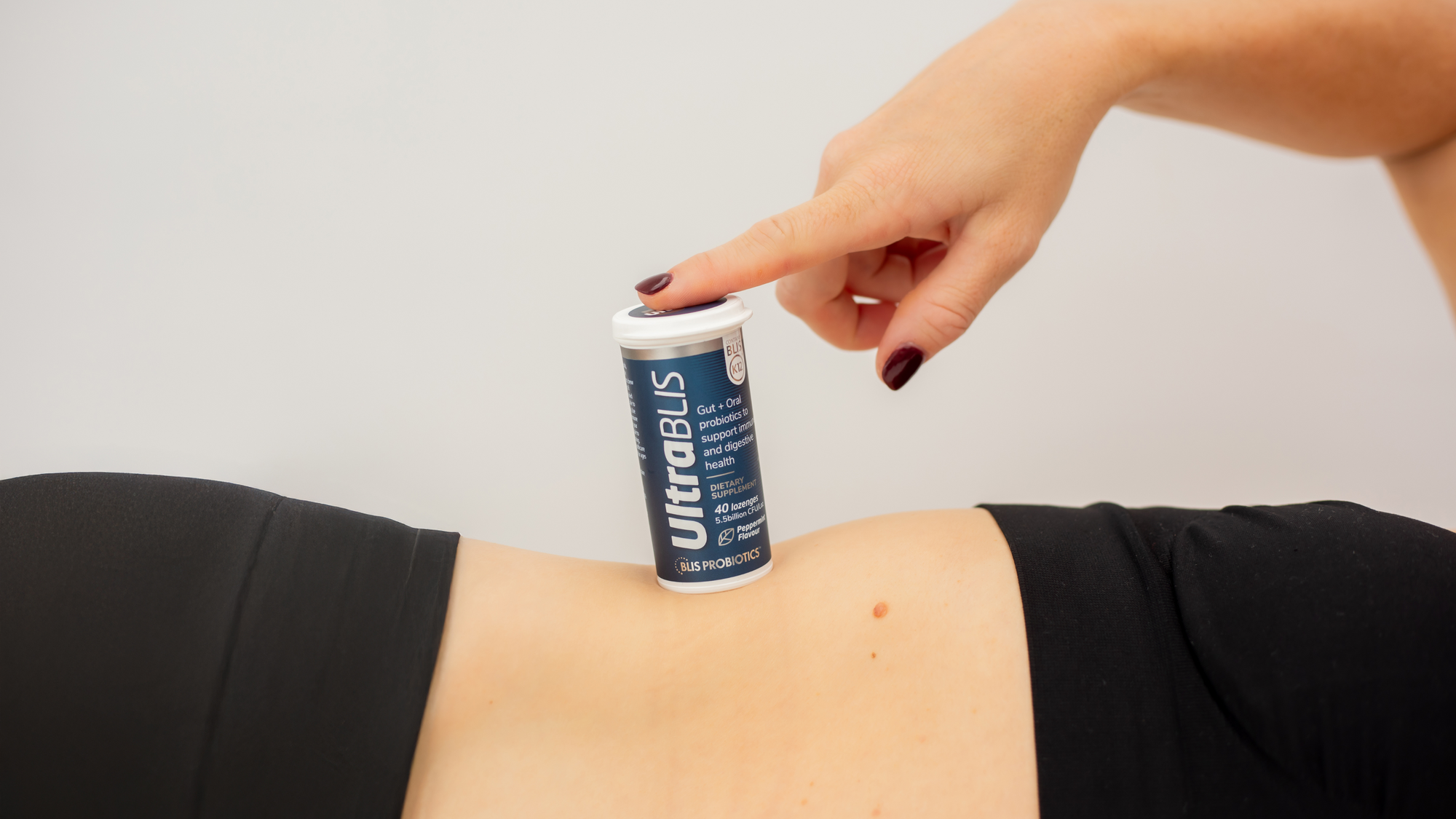
There isn't a single answer here, because no BLIS product has been formulated or trialled specifically as a menopause probiotic. UltraBLIS® supports both gut and oral health together, which makes it a reasonable daily foundation while your body works through hormonal change. DailyDefence® leans more toward day-to-day immune support, useful if you're noticing you're catching more than you used to as hormones shift.
Neither is marketed or evidenced as a menopause treatment, and we won't pretend otherwise. They're general gut and immune support that fits alongside whatever else you're doing to manage this stage, not a replacement for it.
Supporting Gut Health Through Menopause: Practical Basics
A few consistent habits do more for gut health during menopause than any single supplement.
-
Eat a wide variety of fibre sources: greater gut bacteria diversity has been linked to better oestrogen regulation.
-
Move regularly: exercise supports both bone health and gut diversity through overlapping pathways.
-
Protect your sleep where you can: sleep and gut health influence each other in both directions.
-
Give any probiotic routine time: two to four weeks of consistent daily use is the usual window before you'd notice a difference, in line with the trials above.
If bloating, mood changes or sleep disruption are significantly affecting your day to day, it's worth raising with your GP alongside anything you try yourself. Explore UltraBLIS® and DailyDefence® if you want gut and immune support as part of that picture, and see our Benefits of Probiotics for Women piece for the wider picture beyond menopause specifically.
Menopause asks a lot of your body, and your gut is quietly part of that story even when it's not the symptom you notice first. If you want to support it day to day, take a look at UltraBLIS® and DailyDefence® and see which fits where you're at.
FAQs
Are probiotics good for menopause?
Generally, yes, as part of a daily routine - probiotics are considered safe for most healthy adults, including women going through menopause. They're not a substitute for medical care or hormone treatment where that's needed, but they're a reasonable addition alongside the rest of your routine.
Do probiotics help with menopause?
The mechanism is the gut-hormone connection: gut bacteria help regulate oestrogen as it recirculates through the body, and early trials have linked probiotic supplementation to improvements in mood, sleep quality and bone turnover markers specifically. It's not yet established as a proven menopause treatment, but the mechanism and the early findings both point in a consistent direction.
What is the best probiotic for menopause?
There isn't one BLIS product formulated or trialled specifically for menopause. UltraBLIS® and DailyDefence® offer general gut and immune support that can sit alongside a broader approach to this life stage, rather than a targeted menopause probiotic.
Are BLIS products suitable during menopause?
Yes, UltraBLIS® and DailyDefence® and our entire range are suitable for adults, including women going through menopause. If you're managing other health conditions or taking medication, it's worth checking with your GP or pharmacist first, as with any supplement.