
Everyone knows the feeling of a stomach in knots before something stressful, and most people have also noticed the reverse: a rough gut week makes everything else harder to cope with. That two-way relationship runs through the gut-brain axis, which we cover in full in our guide on how gut bacteria influence mood. Here, we're narrowing in on stress and anxiety specifically: what the research actually shows, and where a probiotic realistically fits.
Key Takeaways
-
Chronic stress raises cortisol, and cortisol measurably shifts the balance of bacteria in your gut, not just the other way around.
-
A small number of anxiety-specific trials show modest, strain-dependent reductions in stress and anxiety scores.
-
BLIS K12® and BLIS M18® haven't been trialled for anxiety specifically, but they work at the mouth, the body's first entry point and the start of the gut-brain axis. Supporting that gateway fits naturally alongside stress management, rather than standing in as a treatment for anxiety itself.
-
Digestive symptoms are the clearest, best-evidenced way stress and gut health interact, which is a more realistic place to focus than mood itself.
Does Stress Actually Change Your Gut Bacteria?
Yes. Chronic stress raises cortisol, and cortisol changes the environment your gut bacteria live in, shifting which species thrive and which decline. This is the reverse of the more commonly discussed "gut affects mood" story, and it's the better-evidenced half of the relationship.
A systematic review of human studies on psychological stress and gut microbiota found stress-related hormonal changes were consistently linked to lower levels of beneficial bacteria and shifts in overall microbial balance. That's why a stressful stretch so often shows up as bloating, irregular bowel habits, or an IBS-like flare that seems to come from nowhere.
Timing matters here. One stressful day won't meaningfully shift your microbiome. Sustained, chronic stress is a different story, and it's the pattern most of the research focuses on.
What Does Anxiety-Specific Research on Probiotics Actually Show?
A handful of trials, modest effects, and real strain-to-strain variation. Anxiety research is its own category, separate from general "probiotics and mood" studies, because anxiety is measured with its own scales and the strains studied for it aren't the same ones studied for mood or depression.
A 2023 meta-analysis of probiotic, prebiotic and synbiotic trials for anxiety found a measurable but modest reduction in anxiety scores across the pooled trials. The authors flagged long-term effects, optimal strains, and which groups benefit most as still unresolved. One frequently cited 12-week randomised, double-blind, placebo-controlled trial tested a specific Lactobacillus plantarum strain and found lower self-reported stress and anxiety scores compared with placebo.
Researchers use the term psychobiotics for probiotic strains studied specifically for effects on mood and mental state. A few things worth knowing before assuming this applies broadly:
-
The strain matters more than the category. A result for one Lactobacillus plantarum strain says nothing about how a different strain, or probiotics generally, will perform.
-
BLIS strains sit outside this research. BLIS K12® and M18® are studied for oral and upper respiratory health, not anxiety, so we can't make an anxiety-specific claim for them.
-
Trial sizes are small. Most of this evidence comes from dozens to a few hundred participants, well short of what's needed to confirm effects across different people and situations.
Can Probiotics Help Manage Everyday Stress?
The most defensible use of probiotics here is supporting the gut side of the stress-gut relationship, not treating anxiety directly. Stress reliably disrupts gut balance, and digestive symptoms are one of the clearest ways people notice stress in their body, so supporting that balance has a more direct rationale than expecting a change in mood.
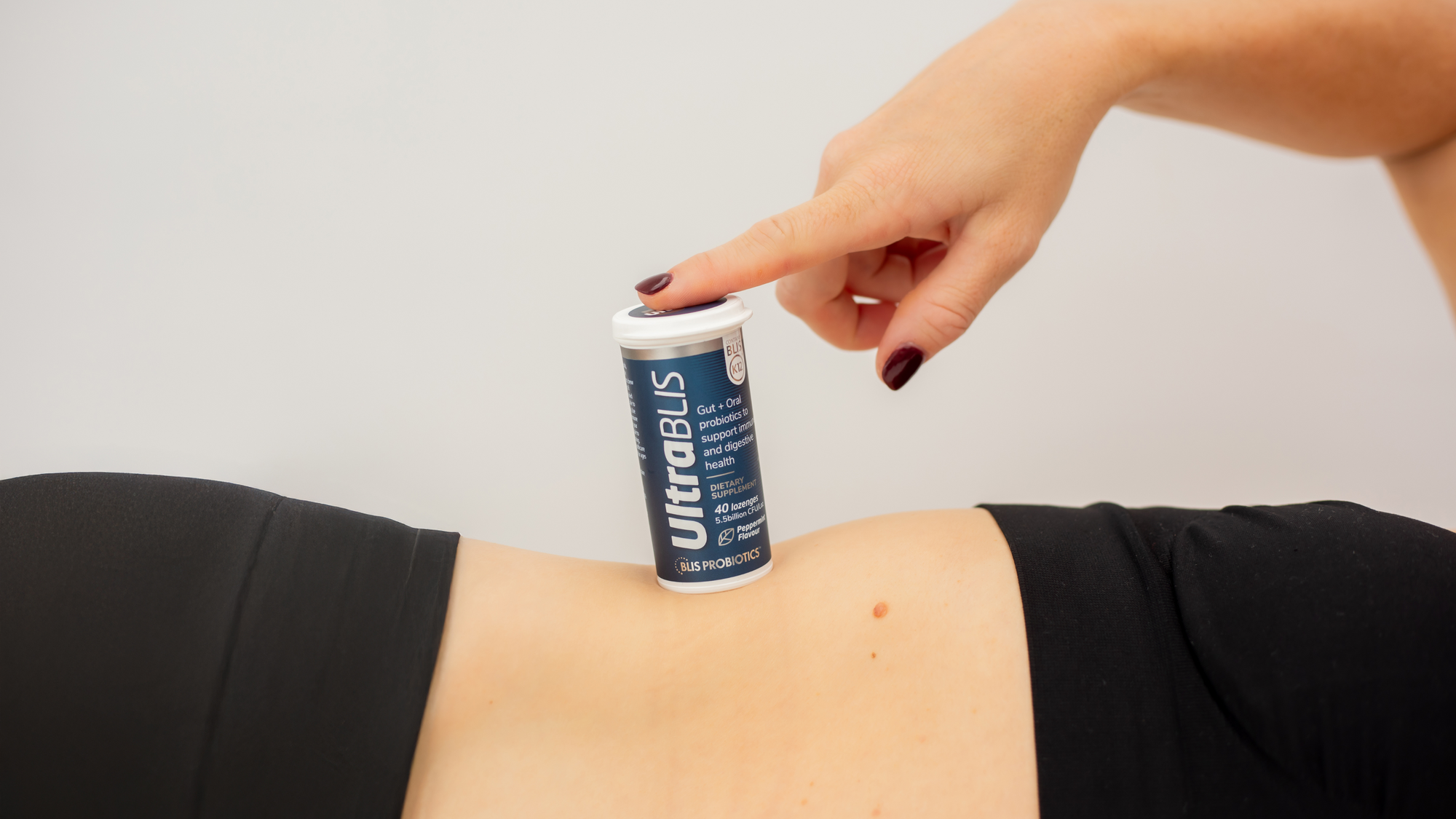
This is where UltraBLIS® fits into a daily routine. It combines two high quality gut strains Bifidobacterium lactis HN019 and Lactobacillus acidophilus La-14 for gut balance with BLIS K12® for the mouth and throat, the first checkpoint of your digestive tract, in a single fridge-free daily lozenge.
Pair that daily habit with the things that already have the strongest evidence behind them for managing stress itself:
-
Consistent, quality sleep
-
Regular movement or exercise
-
A varied, whole-food diet
-
Time outdoors and social connection
-
Stress-reduction practices like breathing exercises or mindfulness
If low mood or anxiety is persistent or affecting your daily life, these habits and a probiotic routine aren't a substitute for professional support. Speak with your GP or a mental health professional.
The Bottom Line
Stress changes your gut, and there's early, strain-specific evidence that certain probiotics can change how stressed you feel in return. Neither direction supports treating probiotics as a fix for anxiety. Supporting your gut is a reasonable, low-risk part of a wider stress-management routine, especially when stress is already showing up in your digestion.
Start your daily gut and oral support today with UltraBLIS®.
Frequently Asked Questions
Can probiotics help with anxiety?
A small number of anxiety-specific trials, including one randomised controlled trial on a specific Lactobacillus strain, have found modest reductions in stress and anxiety scores. The effect is strain-dependent and shouldn't replace professional support.
Does stress really affect gut bacteria, or is it the other way round?
Both directions are real. Stress raises cortisol, which measurably shifts gut bacteria balance, and separately, gut bacteria can influence mood-related signalling, which our gut-brain axis guide covers in depth.
Which probiotic strains have actually been studied for anxiety?
Most anxiety-specific research uses particular Lactobacillus and Bifidobacterium strains tested in isolation, not probiotics as a broad category. Results don't transfer between strains, so a study on one strain doesn't validate others.
Are BLIS probiotics designed to help with anxiety?
No. BLIS K12® and M18® are researched for oral and immune health, not anxiety, and UltraBLIS® is formulated to support general gut and upper respiratory balance and immunity as part of a wider wellbeing routine.
What else helps besides probiotics?
Sleep, regular movement, a whole-food diet, and stress-reduction practices like mindfulness all have stronger evidence for managing everyday stress. Probiotics may complement these habits rather than replace them.